AMD and Microsoft Confirm FSR 4.1 for Xbox Series X, Series S and Both Xbox Ally Handhelds, but Dates Stay Vague
By CriticalPixel ·

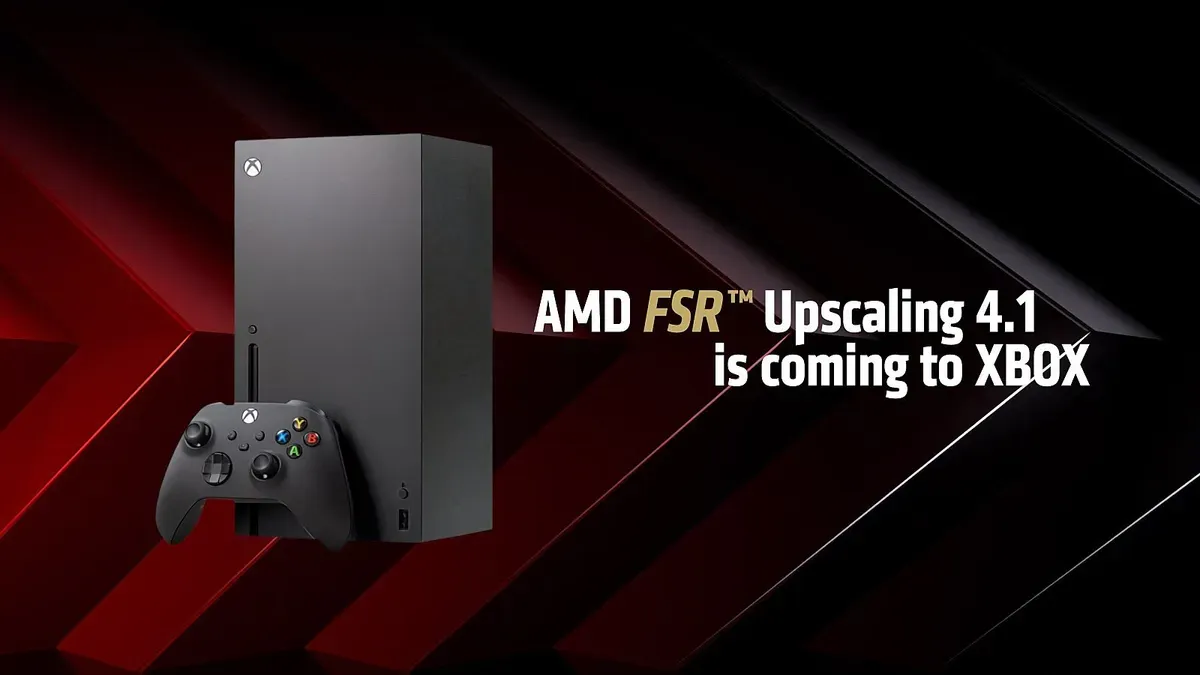
Xbox Series X and Series S owners have spent most of this generation watching rival platforms get smarter upscalers while their boxes made do with older tricks. That changed on October 20, when AMD and Microsoft announced that FSR 4.1, AMD's machine learning upscaler, is coming to the Xbox platform. The list covers the Xbox Series X, the Xbox Series S, the Xbox Ally and the Xbox Ally X, so every current Microsoft box and handheld is in. What the announcement skipped is a date for the consoles, which both companies labeled as coming soon, and that leaves the useful details scattered across reports. Here is what is confirmed, what is only reported, and what is still a question mark.
What AMD and Microsoft Actually Announced
FSR, short for FidelityFX Super Resolution, renders a game at a lower resolution and then rebuilds a sharper picture, and version 4.1 does that with a machine learning model instead of the hand-tuned algorithm older versions used. Windows Central called it a big leap over previous versions, and the spec that matters here is that the hardware spends less effort drawing pixels, so the saved overhead turns into frame rate. Microsoft's Xbox CTO said the company worked very closely with AMD to optimize the technology and framed it as another tool for developers. He also pointed ahead to Project Helix, saying the teams will keep working together and that FSR Diamond will power what comes next. That last line is the one worth underlining, because it ties today's upscaler to whatever Microsoft is cooking for its next generation of hardware.
AMD's own social account pushed the same message the day of the announcement, saying FSR 4.1 is expanding to Radeon RX 6000 series graphics cards and APUs with Xbox support also on the way. Note the order of that sentence. Xbox is treated as the third item on a list, right after desktop graphics cards and laptop chips, which tells you this was a broad AMD roadmap update that Microsoft got to stand next to, not a standalone Xbox reveal. That is fine, and Xbox will take the win, but it explains why the console specifics are so thin.
When It Lands on Each Device
The handhelds get it first. According to Windows Central, AMD and ASUS will push updated drivers into a new Preview Update section of Armoury Crate by Friday, October 23, which works like an early access lane for people willing to risk a few bugs. Windows Central later added a report from ROGAllyLife that the preview comes with a new toggle in the Command Center and supports more than 400 games that already ship with FSR 3.1. Any developer that has already enabled FSR 4.1 in a PC game should see those titles improve automatically once the driver goes live on an Xbox Ally. Windows Central first suggested the base Xbox Ally might be left out, then corrected itself after confirming that the base model is getting FSR 4.1 as well, so that worry is off the table.
The consoles are a different animal. Windows Central's sources say FSR 4.1 reaches Xbox Series X and Series S developers within the next couple of weeks, and that some partner studios already have it in preview builds. On a console it is a developer tool rather than a driver toggle, which means it will not be injected into existing games. Studios have to patch it in or build it into new releases, so how fast your library improves depends on publishers choosing to spend the time. The same sources claim a handful of FSR 4.1 titles are slated for the holiday season, followed by a steady trickle through 2027 and beyond. AMD's demo used Blood of Dawnwalker on Xbox Ally hardware, so that game looks like a safe bet for the first batch. A handful of games in the first holiday window is not a revolution, and nobody should expect the whole Series X catalog to sharpen up overnight.
Read AMD's Numbers With Care
The same week, AMD shipped its Adrenalin 26.10.1 driver, which brings FSR 4.1 to the whole Radeon RX 6000 range, and Hardware Busters points out that this arrived months ahead of the early 2027 window AMD gave in May. That is good news for anyone who bought into RDNA 2, and it matters for Xbox because the Series X and Series S are built on RDNA 2 class silicon. Those chips have no dedicated matrix hardware for machine learning, so the network has to run on regular shader cores and compete with the game for compute. AMD has not said what precision it uses or how much it trimmed the model for these older parts. Hardware Busters adds that for handhelds and APUs the new model is less than half the size of the earlier FSR 4.1 network, which is the lightweight variant AMD promised earlier this month.
Then there are the benchmark slides. AMD's headline demo shows Crimson Desert on an RX 6800 XT at 4K Ultra running at 95 FPS with FSR 3.1 and 101 FPS with FSR 4.1. Look closer and the comparison pits FSR 3.1 Quality against FSR 4.1 Performance with frame generation turned on, two modes that render at very different internal resolutions. AMD's actual argument is that the new Performance mode looks as good as the old Quality mode, so you can drop a tier and come out ahead. That is believable given how much FSR 4 improved image quality on RDNA 4, but it also admits that the machine learning pass is not free at equal input resolution. Every number in that presentation comes from AMD itself, and independent testing on RDNA 2 class hardware is what will settle how good this is on a Series S.
How the Community Is Taking It
Reaction leans positive with a side of platform war noise. IGN's post framed the news as FSR 4.1 finally coming to Series X in a way that rivals the PS5's QSSR upscaler, which Windows Central connected to PlayStation's own recent upscaling announcements. Replies under it ranged from a blunt about time to one player saying that Series X owners finally getting FSR 4.1 this deep into the generation is a win, because sharper frames without buying new hardware is something everyone can respect. Another called it fair play after Series X owners spent years squinting at fuzzy upscaling while the PS5 got the shiny stuff. Others went straight to console war material, arguing over whether PSSR 2.0 or QSSR beats FSR 4.1, and one reply joked that the 20 remaining Xbox users could celebrate.
The sharpest practical complaint came from a reply pointing out that FSR 4.1 on Series X and S is still coming soon with no date or game list from AMD or Xbox, and that the Series S stands to gain the most, especially if it lands before GTA 6 on November 19. That is the right frustration. Reaction here is still a small sample from replies on a few posts, so treat it as a mood and not a verdict, but the mood is clearly relief mixed with impatience.
The CriticalPixel Take
Good news, delivered badly. A better upscaler on the Series S is one of the most useful things Microsoft could add to a console that developers have complained about for years because of its awkward memory split. Windows Central argued FSR 4.1 could ease the pressure on studios to hit a native 1080p image, and that is the real win: not prettier screenshots, but fewer compromises in performance modes. It also fits the current mess of rising hardware and memory prices, where stretching the life of a console people already own beats asking them to buy another one. I would much rather see engineering effort go here than into another logo refresh.
The execution is where it falls apart. Announcing a headline feature with a soon label, no list of games and no date for the platform holder's biggest install base is lazy communication, especially when the handheld side already has a firm October 23 preview. Because the consoles depend on developer patches, a handful of holiday titles means most of your library stays as blurry as it is today for a long while. Treat it as a good direction, not a finished upgrade. Until Microsoft names the first games, ships a date, and someone independent compares a Series S with FSR 4.1 against the old output, hold the applause. The foundation is solid, and the Project Helix tease suggests this is a long game, but a platform feature is only worth what developers actually ship with it.
Sources
Windows Central: When will Xbox Series X|S and Xbox Ally get FSR 4.1
Hardware Busters: FSR 4.1 on RX 6000 lands months early, with Xbox Series X and S next in line
AMD Gaming on X: FSR 4.1 expanding to RX 6000 and APUs, Xbox support on the way