AMD's Zen 6 Crams 12 Cores and 48MB of L3 Onto One CCD, and Ryzen Gaming Chips Are Next
By CriticalPixel ·
A Server Launch Is Where Gaming Silicon Shows Up First
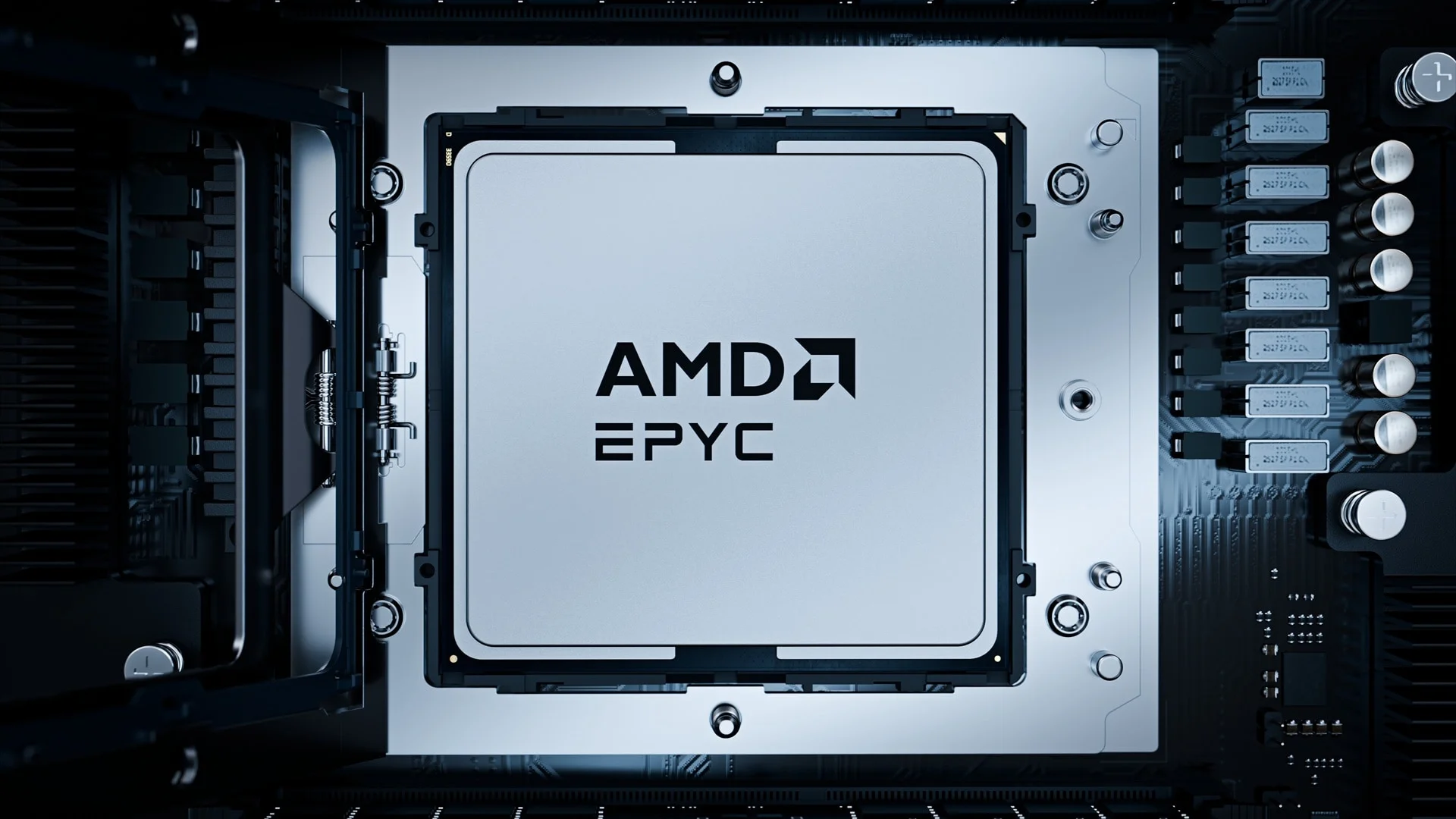
AMD opened the doors on its 6th Gen EPYC SP7 server processors on November 10, and those chips are already shipping to server vendors with Azure and OCI instances on the way. That reads like data center business, because it is. The part that matters for anybody building a PC sits under the heat spreader: every one of those parts runs on Zen 6, the architecture AMD will eventually slide into Ryzen desktop CPUs. A single Zen 6 CCD now carries 12 full performance cores instead of eight, and 48MB of L3 cache instead of 32MB. Nobody buys a 400W server chip to chase frames in a shooter, but the core design is the thing you will be shopping for in a year or two.
Here is the mechanical change and why it should matter to you. A current Zen 5 desktop chip that goes past eight cores has to stretch them across two CCDs, and those chiplets talk to each other over the fabric with a latency cost on anything heavily threaded. Zen 6 puts 12 cores on a single CCD built on TSMC's N2P process, which means a 12 core Ryzen part could keep everything on one piece of silicon with no cross chiplet hop. The cache scales with it: 4MB of L3 per core on the full Zen 6 cores, 48MB total per complex. TechPowerUp's deep dive on the Venice launch walks the same numbers and notes that the dense Zen 6c core now gets the same per core cache as the fat core, which kills the penalty that kept the c variants a niche pick.
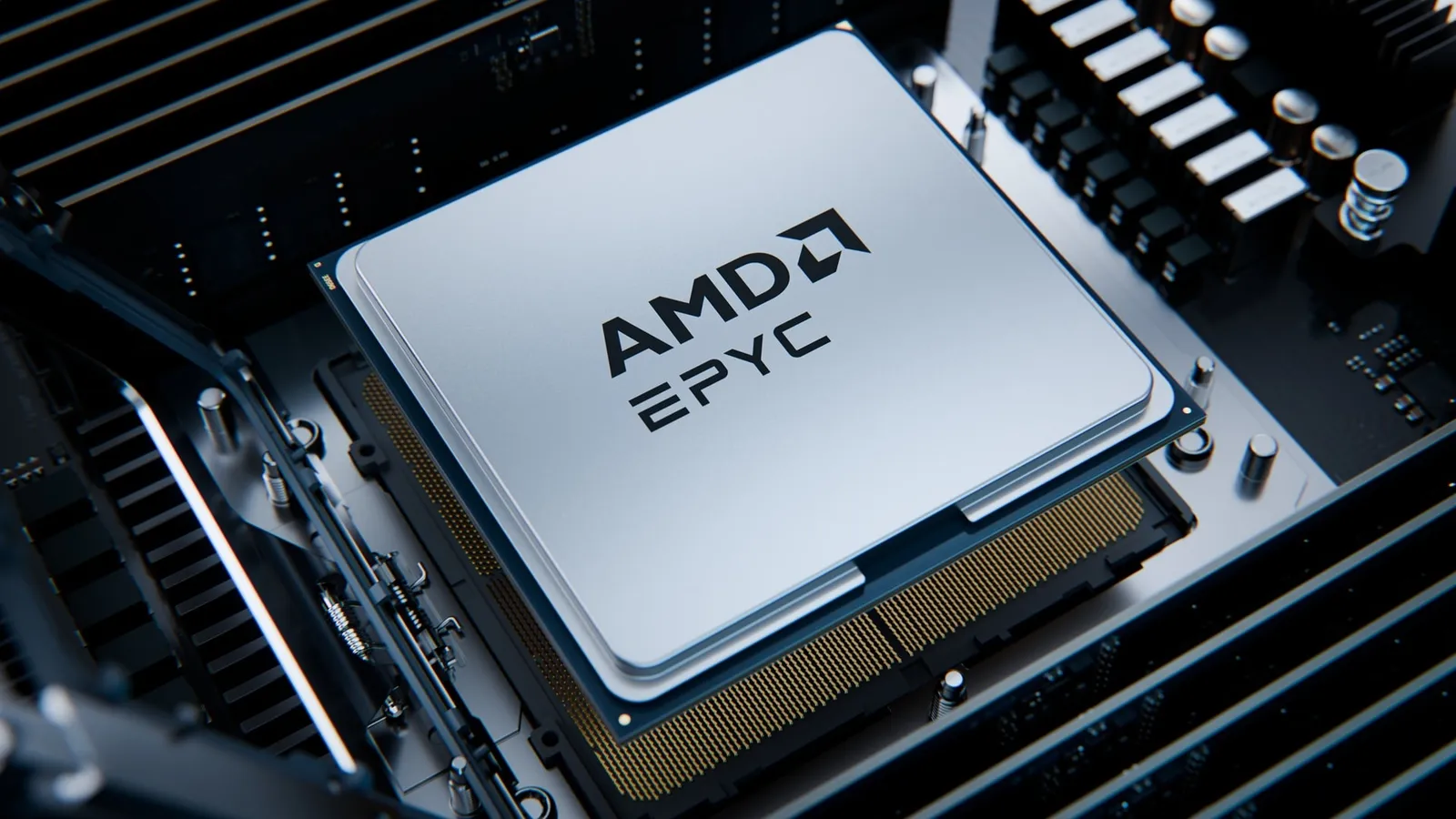
The dense core side is where the density jump gets silly. Zen 6c doubles cores per complex to 32 and quadruples total L3 to 128MB, up from 16 cores and 32MB on Zen 5c. Peak core counts on the platform climb from 192 to 256, and the clock ceiling on those dense cores moves from 3.7 GHz to 4.1 GHz. None of that is coming to a socket on your desk, but it tells you how AMD is laying out chiplets, and that layout decides how many cores land in the next Ryzen 9. When a 32 core complex fits in the same footprint as a 16 core one, the entire product stack above it gets cheaper to build.
The 3D V-Cache Numbers Are the Real Headline
Stacked cache is where this turns into a gaming story. Venice-X 9006X SP7 tops the server stack at 96 cores with 1152MB of L3, which works out to 144MB for every 12 core CCD. Break that down and you get 48MB of regular cache with 96MB of 3D V-Cache sitting on top of it. The Ryzen 7 9800X3D, still the chip most builds recommend for frames per dollar, runs 96MB in total with 64MB of that stacked. A 12 core Zen 6 X3D part with 144MB per CCD would be working with 50 percent more cache than the current gaming favorite, and it would do it without handing threads across a chiplet boundary. That combination is the one worth caring about.
AMD is claiming up to a 27 percent IPC gain for Zen 6 against Zen 5 in certain server workloads. The supporting changes are the usual boring ones that add up: wider branch prediction tables and queues, a return address stack that grew from 52 to 64 entries, two branch predictions per cycle, and a bigger reorder buffer. Peak clocks on the full Zen 6 cores inside Venice land at 5.3 GHz. Desktop rumors keep floating above 6 GHz for Ryzen, and that is rumor territory until AMD says it on the record. Read the architecture as having headroom, not as having a confirmed clock speed.
What It Does and Does Not Tell Us About Ryzen
Two things are missing and both of them matter. There is no consumer announcement, no Ryzen SKU list, no price and no date. PC Gamer's write up pegs a likely first half 2027 window for Zen 6 desktop parts, and it frames that as speculation rather than a roadmap. AMD also built this launch around agentic AI and enterprise workloads, which is where all the marketing language lives. Gaming gets the architecture as a byproduct of a data center business with better margins. That is not cynicism, it is just the order of operations AMD has followed for several generations now, and it is why server launches are worth reading if you care about desktop chips.
The competitive picture matters too. Intel's Nova Lake client chips are reportedly lined up for a CES 2027 reveal on the 18A-P process, which would put both architectures in the same buying window for the first time in years. Intel has been stuck reacting on core counts and cache while AMD shipped X3D part after X3D part, and a real fight at the top would be good for prices. It would also mean the 12 core Zen 6 part cannot simply be a $700 halo product with nothing underneath it. Competition is the only thing that has ever fixed a bad CPU market.
Reaction Is Thin Because the Story Is Two Days Old
Community reaction to the Zen 6 details is limited so far. PC Gamer's post on the deep dive had picked up roughly a dozen likes and a few reposts in its first hour, which reads closer to a hardware forum thread than a launch day eruption. The replies that exist are doing math on cache per core instead of arguing about core counts, and that tracks with how the DIY crowd has behaved since X3D chips reset expectations for a gaming CPU. It is early, the only shipping silicon is server silicon, and nobody has a consumer benchmark to fight over. Treat any confident performance claim you see this week as a guess with a diagram attached.
CriticalPixel Take
AMD's best move here is not the core count, it is the cache. Twelve cores on one CCD is a decent bullet point, but the reason a 9800X3D still embarrasses chips with twice the cores in most games is memory locality, and Zen 6 makes that locality cheaper to build at higher core counts. A 12 core single CCD part with 3D V-Cache underneath is the shape of the chip that finally makes an eight core gaming CPU feel entry level. The catch is that AMD will price it like the only game in town. This has already been a brutal year to buy memory or a graphics card, and a halo CPU with a halo invoice is not a rescue plan.
There is also the boring possibility that Zen 6 desktop chips land late in 2027 with a modest clock bump and a price increase, because the memory market is a mess and AMD has no reason to rush a replacement for a lineup that still sells. The interesting scenario is the one where a 12 core X3D chip shows up in the first half of 2027 at a number that does not require a second mortgage. Nothing in the EPYC launch rules either one in or out. Watch for the first Ryzen leak that comes with a CCD diagram attached, because that is the moment this stops being a server story and turns into a shopping decision.
Sources
AMD Newsroom: 6th Gen EPYC processors and Zen 6 availability
AMD Newsroom press kit: 6th Gen EPYC Now Available
TechPowerUp: AMD Zen 6 technical deep dive on cache and core types