California's Protect Our Games Act passes assembly, forcing publishers to keep paid games playable
By CriticalPixel ·
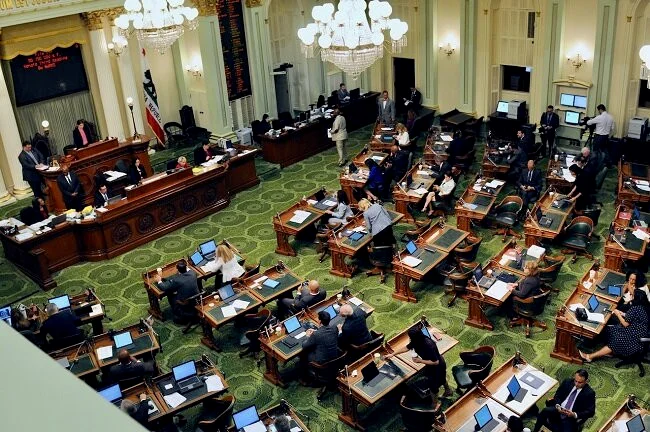
California just told the video game industry something that should have been obvious since the day someone first bought a disc and put it in a console: if you sell someone a game, you do not get to take it away later without consequences. On May 27 the California State Assembly passed AB 1921, the Protect Our Games Act, by a vote of 43 to 16. The bill targets the increasingly common practice of publishers pulling the plug on always-online games and leaving players with nothing but a dead icon in their library and a receipt that suddenly feels like a receipt for a rental nobody agreed to.

The bill was introduced by Assembly Member Christopher Ward back in February 2026 and it went through multiple rounds of amendment before the final version landed on May 18. It is not a radical law. It does not force publishers to keep servers running forever. It does not demand they open source their code. What it does is establish a baseline of consumer decency that the industry has spent the last decade proving it cannot self-regulate: give players 60 days notice before shutting a game down, provide a patch or alternative version that lets them keep playing offline if possible, or issue a full refund. If none of those things happen, the California Attorney General or any district attorney can sue the publisher.
What the bill actually says
AB 1921 applies to paid digital games first available for purchase or rereleased on or after January 1, 2027. That date matters because it means the bill is not trying to retroactively punish Ubisoft for The Crew or Sony for Concord. It is drawing a line in the sand and telling publishers: from this point forward, you structure your games and your business models around this obligation. The bill specifically excludes subscription services like Game Pass, free-to-play games, and any game where the seller cannot revoke access after purchase, meaning games that let you permanently download and play offline are already in the clear. The law targets the specific predatory pattern where a game is sold as a product but functions as a service that can be turned off at any time.
The 60-day notice requirement is not just about sending an email. Publishers must notify players directly through the game itself and post the information publicly on their website. They have to spell out which services are ending, which features will disappear, and any security risks the shutdown might create. The patch or refund requirement kicks in the moment services stop. If a publisher cannot provide a version of the game that works independently of their servers, they must refund the full purchase price. And from that point on, selling or distributing the dead version of the game is prohibited. No more leaving a game up on the Steam store with a fine print note that it will stop working in 30 days while the Add to Cart button stays live.
A movement built on a dead racing game
The Protect Our Games Act did not come out of nowhere. It is the direct result of the Stop Killing Games movement, which YouTuber Ross Scott launched in 2024 after Ubisoft shut down The Crew on March 31 of that year. The Crew was a 2014 open-world racing MMO that people paid full price for, bought expansions for, and sunk hundreds of hours into. Ubisoft did not just turn off the multiplayer matchmaking. It killed the authentication servers, making the entire game including its single-player content completely inaccessible to everyone who bought it. The game disappeared from Steam. Refunds were not automatically issued. The company literally rendered a product customers owned into digital garbage and walked away.

Scott's campaign tapped into something that had been simmering for years. The Crew was not the first always-online game to get killed, but it became the rallying point because Ubisoft handled it with such a complete disregard for the people who bought the game. The movement gathered over a million petition signatures globally, launched a European Citizens' Initiative, pushed the UK government for a formal parliamentary response, and filed legal challenges in France under consumer protection laws. The California bill is the first time those demands have crossed into actual legislation, which is significant not just symbolically but practically, because California is where a huge chunk of the games industry is headquartered. EA is in Redwood City. Activision Blizzard is in Santa Monica. Riot is in Los Angeles. If this becomes law, those companies answer to it.
The ESA is already pushing back
The Entertainment Software Association, the lobbying arm of the game industry that represents companies like EA, Activision, Microsoft, Sony, and Nintendo, has opposed expanded game preservation efforts. The ESA's position is that opening server code or online features of discontinued games creates security risks and intellectual property problems. They argue that game preservation should be handled through curated museum and library programs, not through legal mandates that force publishers to invest in end-of-life engineering for every game they ship. The Video Game History Foundation and preservation groups fired back that games are cultural artifacts the same way films and books are, and that the ESA's position essentially boils down to we would rather you lose access to your purchase than slightly inconvenience our quarterly earnings.
There is also the question of enforcement. AB 1921 authorizes the Attorney General or district attorneys to bring civil actions, which means enforcement depends on political will and state resources. It does not create a private right of action for consumers themselves, so individual players cannot sue Ubisoft directly under this law. That is a real limitation. But the mere existence of the law creates a compliance burden that publishers now have to factor into their budgeting for every live-service game that launches after 2027. That compliance cost is the real leverage here. It makes killing a game slightly more expensive, and slightly more expensive is sometimes all it takes to change a corporate calculation.
What this means for the industry, starting in 2027
Any publisher planning to ship an always-online paid game after January 1, 2027 now has to account for the California mandate. That means every live-service game with a box price needs an end-of-life plan that includes either an offline mode, a final patch that decouples the game from central servers, or a refund fund set aside for the day the plug gets pulled. For studios like Bungie shipping Marathon or IO Interactive shipping 007 First Light, the calculus just shifted. The bill does not kill live-service games. It does not ban always-online design. But it does force publishers to answer a question they have been dodging for years: what happens to the thing I bought when you decide you are done supporting it?
This also puts pressure on other states to follow suit. California is often the tip of the spear for consumer protection legislation in tech, and the games industry is watching this bill closely because it sets a precedent that could domino into New York, Washington, the EU, and beyond. If the California State Senate approves this and the governor signs it, other states will have a working template. The industry knows that, which is why the ESA's opposition has been active rather than passive. This is not a symbolic fight for them. It threatens the core assumption behind the live-service business model, which is that when a game stops being profitable, you just flip the switch and nobody has to answer for it.
One interesting edge case is what the bill does not cover. Subscription services like Game Pass and PlayStation Plus are explicitly carved out. That makes sense legally since subscribers do not own the games they access, but it also highlights a growing tension in the industry. As more games move into subscription catalogs, the ownership questions that sparked AB 1921 could evolve into a different set of problems. If the only way to access a game is through a subscription, and the subscription eventually drops that game, what happens to players who invested hundreds of hours into it? That is a separate legal fight, but it is the next logical chapter in this conversation.
The path to law still runs through the Senate
AB 1921 is not law yet. It passed the Assembly and now moves to the California State Senate, where it will face committee hearings and a floor vote. If it clears the Senate, it goes to Governor Gavin Newsom's desk for signature. The timeline on that is uncertain. California's legislative session ends in September 2026, so the bill either gets done this summer or dies and needs to be reintroduced. Given the political climate around consumer rights and big tech, the bill has a real shot. The 43-16 Assembly vote was not squeaky tight. It crossed party lines enough to suggest genuine appetite for this kind of regulation, not just partisan posturing.
For now, the game industry is on notice. The movement that started with a YouTuber furious about a dead Ubisoft racing game just notched a legislative win in the state that houses more game studios than anywhere else in the country. Whether AB 1921 becomes law or not, the conversation about game preservation and consumer rights has moved from Reddit threads and YouTube videos into the California State Capitol. Publishers can lobby against it, and they will. But the argument that they should be allowed to permanently destroy something someone paid for was always going to have an expiration date. That date is looking a lot closer than it did a year ago.