Gravity Well, the Anti-Crunch Studio Staffed by Apex Legends Veterans, Goes Dark Without Shipping a Game
By CriticalPixel ·
Gravity Well is done pretending it can wait out the market. The studio posted a short statement on Gravity Well's homepage today confirming that the team is going into hibernation, that the funding it lost earlier this year never came back, and that the game it spent six years building will not ship under the Gravity Well name for now. There was no trailer to pull, no store page to delist, no refund window to open. Six years, two pieces of concept art, and one paragraph telling recruiters to trust the resumes that land on their desks.
What Gravity Well Was Supposed to Be
Drew McCoy and Jon Shiring founded the studio in 2020 after leaving Respawn, where McCoy executive produced Apex Legends and Shiring worked as a lead engineer. Mon Saetern signed the shutdown note alongside them. The pitch was simple and, at the time, genuinely rare: a remote-first team with AAA credits that refused to grind people into dust. McCoy told PC Gamer that the health of the team was an absolute top priority, and he spelled out what that meant in plain terms. Anti-crunch, fair pay, creative freedom for everyone on staff.
Vertical Slice notes that the plan was to grow to roughly 80 people and build a new franchise around a gameplay-first philosophy, leaning on lessons from Call of Duty, Titanfall and Apex Legends. That is the kind of studio the industry says it wants: experienced leads, no publisher breathing down their necks, a promise to treat staff like adults. It is also the kind of studio that has no revenue line until a publisher or a platform holder decides the pitch is worth funding.
The Money Left First
The sequence is brutal and familiar. Funding was pulled in the spring, and Gravity Well could not find a replacement backer. In October the studio cut more than 40 people, the majority of its staff, and said it would carry on with a much smaller team in what it called a fight for survival. Today's message closes that loop. The statement says the time has come for Gravity Well to go into hibernation, adds that the team still believes in the IP and the game it was building, and then invites publishers and investors to get in touch. That last line is the politest way anyone has ever asked for a rescue.
Nothing about this is exotic anymore. Studios with far more runway have folded this year, and the ones that survive are usually the ones with a live service game printing money or a platform holder willing to eat the losses. Gravity Well had neither. What it had was a team with shipped AAA credits, a promise about crunch, and a pitch nobody outside the building ever saw.
Six Years Without a Reveal
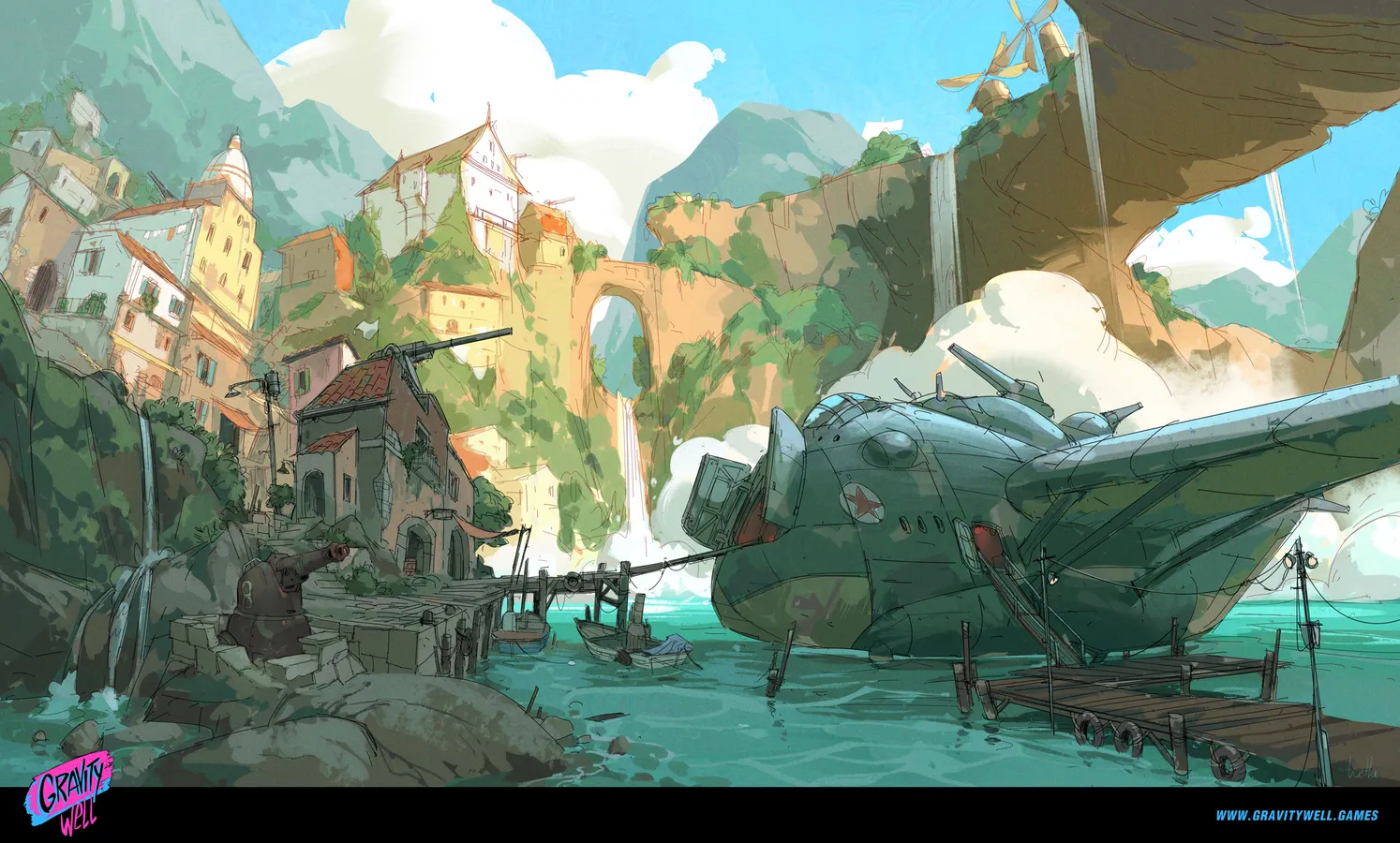
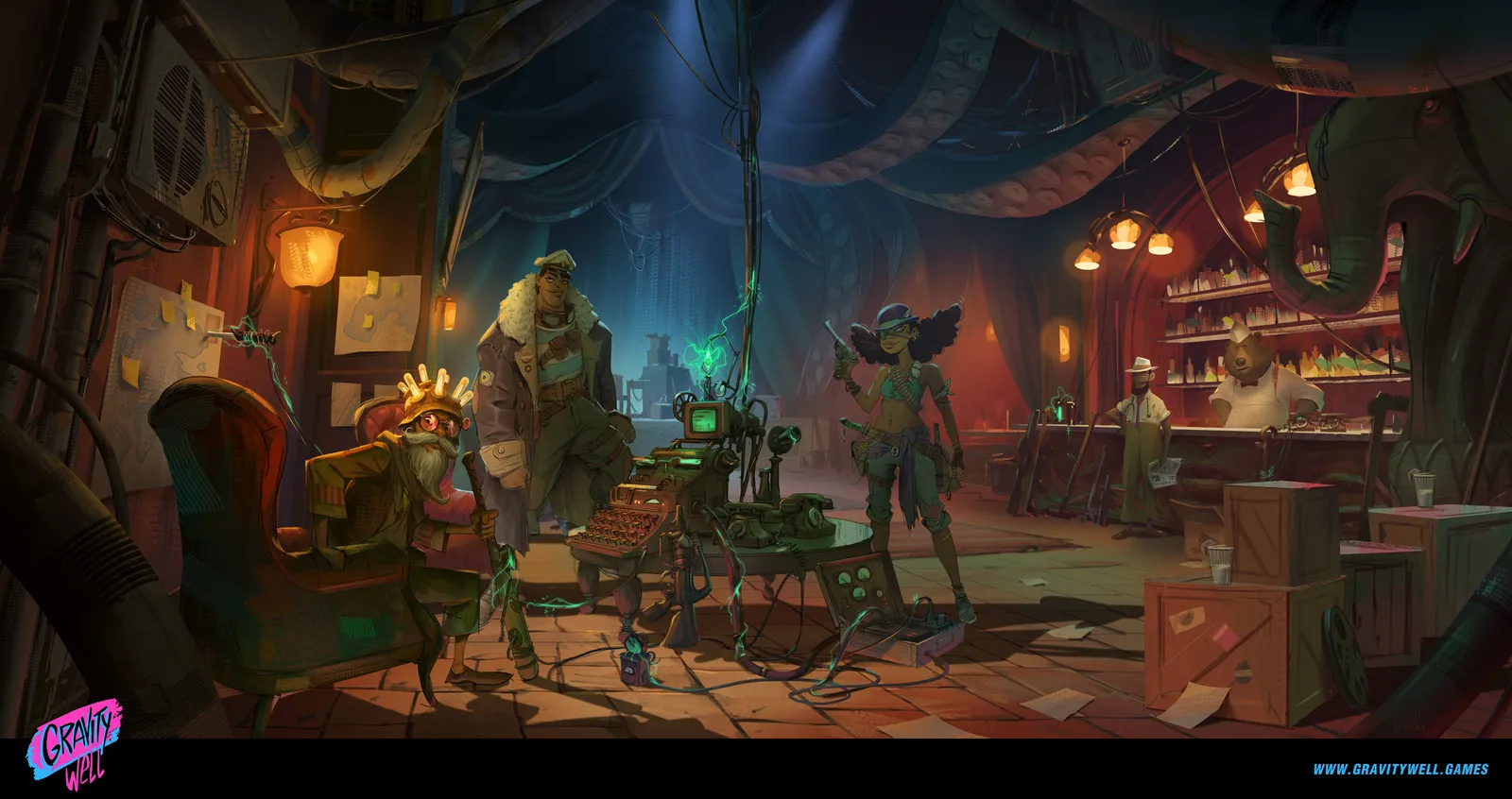
That last part is the uncomfortable one. Six years is a long time to keep a project under wraps, and Gravity Well never showed gameplay, never named the game, never gave it a release window. Concept art is all the public got, and the two pieces now sitting on the studio's site do not look like another Apex Legends clone. One is a cliffside harbor town with a waterfall pouring over old stone and a fat seaplane tied to a dock, the sort of place you expect an airship crew to drink in before a heist. The other is a tavern interior full of armored figures, hanging lanterns and crates stacked to the ceiling, with one masked character who looks like they run the place. Fantasy, adventure, maybe a bit of comedy. Whatever it was, it was not the movement shooter everyone assumed ex-Respawn leads would make.
Rock Paper Shotgun points out that this is the second project led by former Respawn developers to fall apart this year, after Wildlight and Highguard. That is a pattern, not a coincidence. The people who built Titanfall and Apex have now spent years watching their next studios get starved by the same funding cycle that made their old games possible. Pedigree buys meetings. It does not buy payroll.
What the Industry Keeps Losing
The counterargument writes itself: six years without a reveal is a long time, and a studio that never shipped has no track record to defend. Fair. But the math cuts both ways. A team that stays quiet for six years is usually a team that keeps getting told to wait for the right publishing deal, and every extra quarter of silence makes the next pitch harder. Gravity Well did not fail because the leads forgot how to make a shooter. It failed because the money that funds unannounced games dried up while it was still building one.
The studio did right by its people on the way out, which is more than most. The statement tells hiring managers that any Gravity Well resume comes with the team's highest recommendation, and the October layoff note asked for the same. On Bluesky, where the studio posted that layoff message, the replies were a wall of developers and players saying some version of this sucks. Nobody was dunking. People who have been through the same thing know what that room felt like.
The Take
Here is the part that should annoy anyone who plays these games. The industry keeps telling us that the way to fix burnout is to build studios like Gravity Well, and then it lets those studios die of starvation while live service giants post record quarters. Anti-crunch is not a perk you can budget around when the funding dries up. It is a structural bet that the people making the game will still be there in year six. Gravity Well made that bet in public and lost it in public.
Reaction is limited so far, mostly because there is not much to react to beyond a paragraph on a website. One reply under a post linking the Vertical Slice story on X summed up the cynical read: an ex-AAA studio that has not shipped in six years is a story as old as time, and the poster added that they do not wish it on anyone. The sympathetic read is louder on Bluesky, where more than a dozen replies to the October layoff post asked what happens next. Both reactions point at the same thing. Nobody is surprised, and that is the problem.
Gravity Well says it still believes in the IP and the game, and that it does not know what comes next. Maybe a publisher picks up the phone. Maybe the concept art becomes a pitch deck for a smaller team in two years. For now the site is a farewell note, the staff is scattering into a brutal job market, and the game stays a mystery. Six years of work deserves better than a closing paragraph on a homepage, and so do the people who made it.
Sources
PC Gamer: studio founded by former Apex Legends leaders is closing without releasing a game
Rock Paper Shotgun: ex-Respawn studio Gravity Well announces hibernation
Gravity Well: official hibernation statement
Vertical Slice: Gravity Well enters hibernation one month after cutting 40 jobs