Steam Generated $11.1 Billion in H1 2026 as Its Back Catalog Outpaced New Releases
By CriticalPixel ·
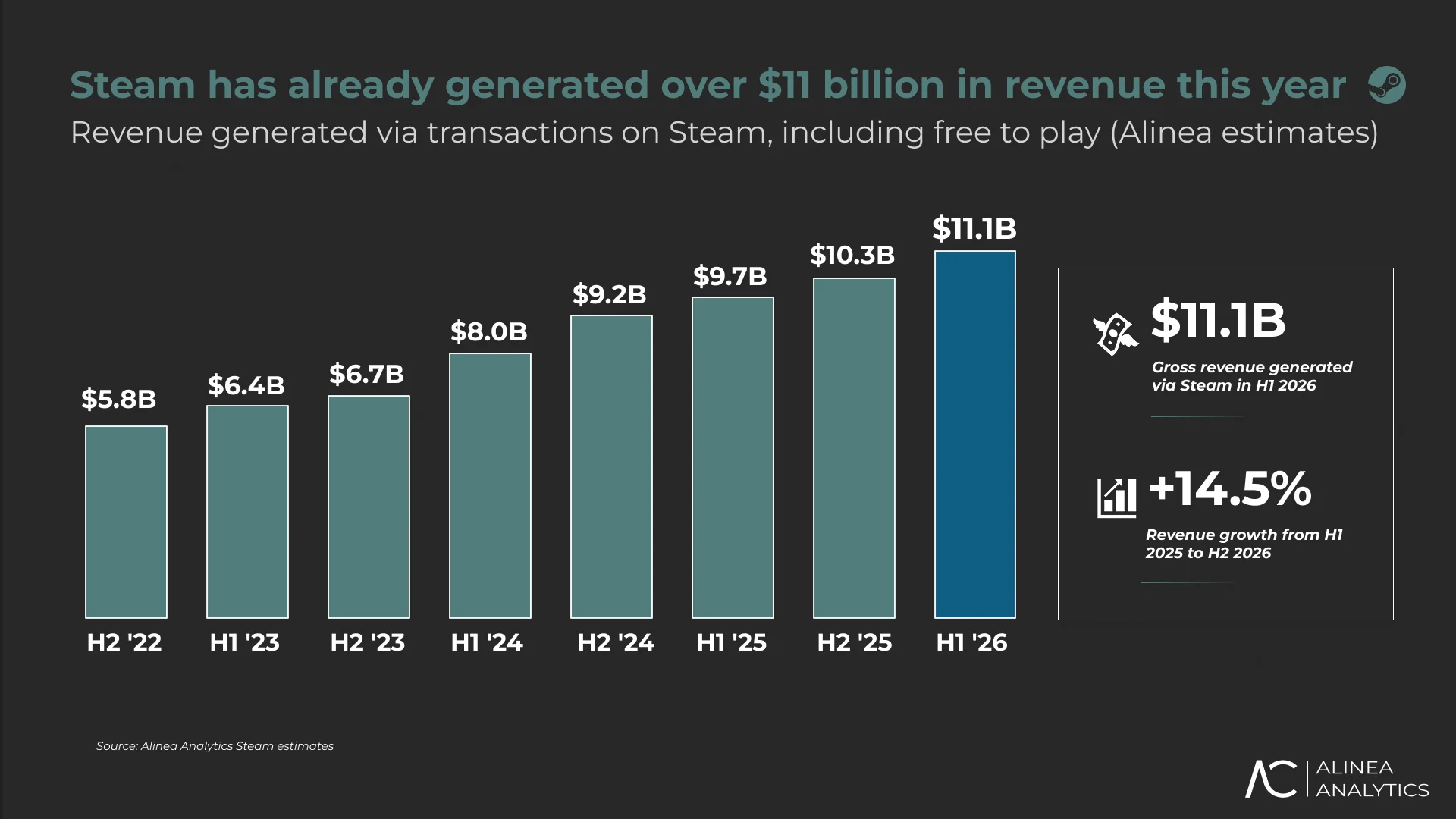
Steam just posted the kind of number that makes every platform strategy meeting uncomfortable. Alinea Analytics estimates that games on Valve's storefront generated $11.1 billion in gross revenue during the first half of 2026, the platform's biggest six-month result yet. Eurogamer and GamesRadar both picked up the estimate, which gives the headline more weight than a random social post but does not turn it into audited Valve reporting. The sharper story is not just that Steam keeps growing. It is that older games are doing more of the work while new releases fight for a smaller slice of a much larger pie.
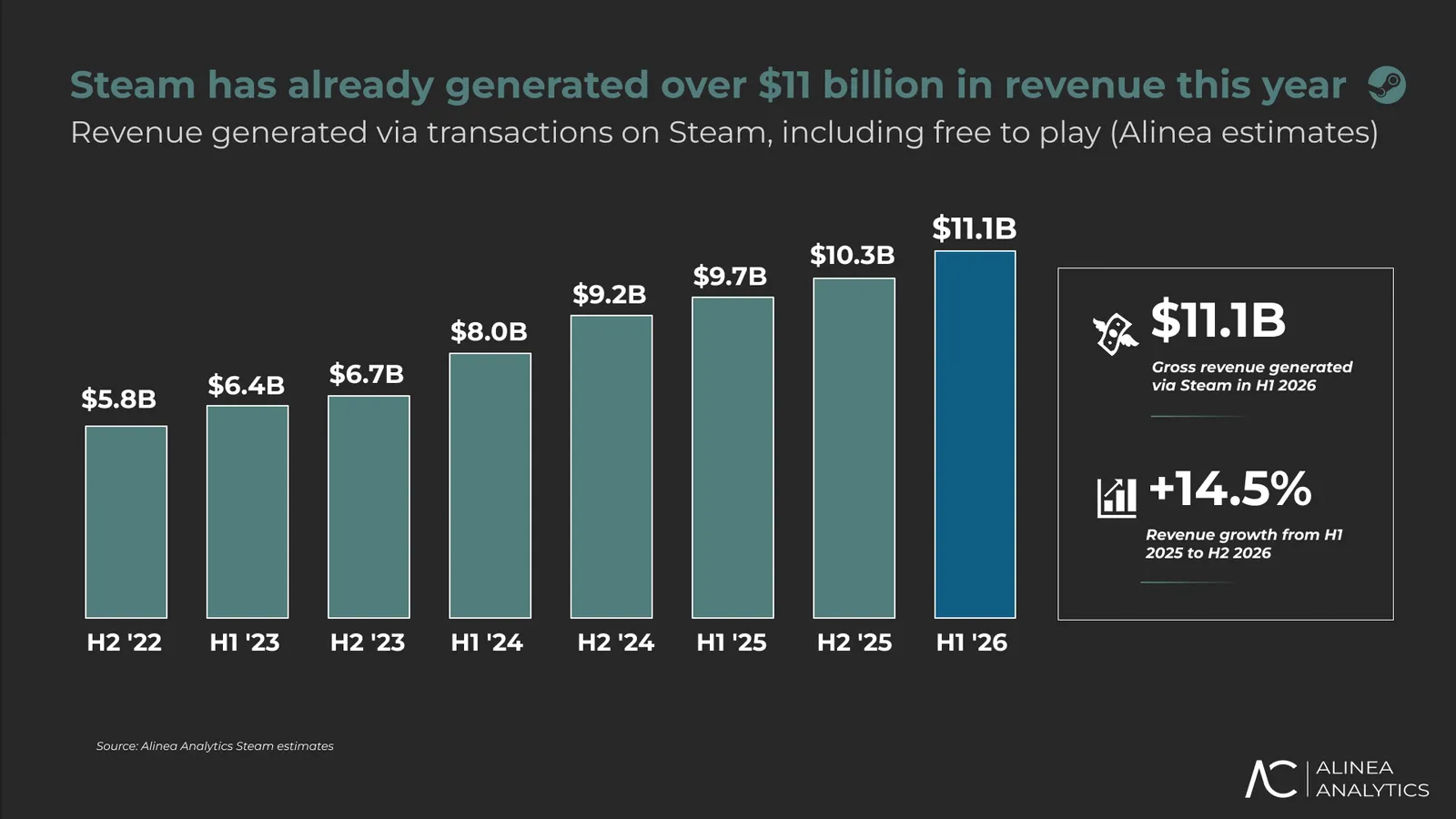
The number is huge, but the comparison matters
Alinea's estimate puts H1 2026 revenue 14.5 percent above H1 2025 and 8 percent above the holiday-heavy second half of 2025. That second comparison is the nasty one for anyone who assumed the first half was simply riding a packed release calendar, because the back half of a year usually benefits from holiday buying and major seasonal sales. Steam's first six months also nearly matched the $11.4 billion Alinea estimates for the whole of pandemic-peak 2021. The firm says H1 2026 was 4.7 times larger than H1 2017, a decade-long climb that survived the post-pandemic correction. These are market estimates from Alinea, not a financial release from Valve, so the right read is direction and scale rather than false precision.
Why Steam keeps pulling money from the market
Alinea points to several forces working together. The Chinese market remains a huge part of Steam's audience, new releases are arriving at higher prices, viral co-op games can turn into sudden storefront events, and publishers have become much better at keeping older catalogs visible through discounts and bundles. The most revealing piece is the return of third-party publishers after years of trying to push players into separate launchers. Those experiments added friction, split libraries, and made every purchase feel like another account-management chore. Steam wins by being the place where the game is already installed, the friends list is already waiting, and the sale page is one click away.
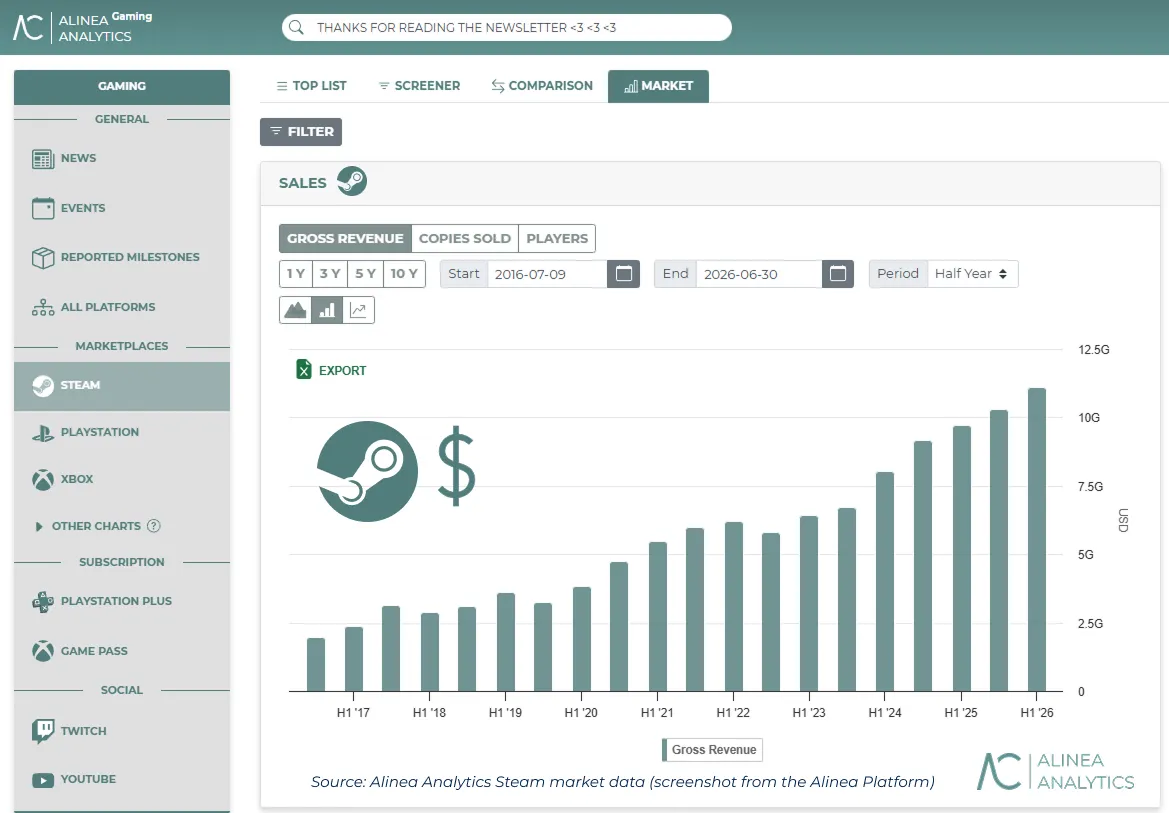
The back catalog is taking the wheel
The data gets more interesting when Alinea separates games released in the current year from everything that came before. New releases supplied 29 percent of Steam revenue in H1 2024, then 27 percent in H1 2025, and only 21 percent in H1 2026. That leaves 79 percent coming from the back catalog, a mountain of games that includes proven hits, discounted experiments, and the titles players missed when they launched. This is not a sign that new games stopped mattering. It means the storefront has become so deep that a player can spend a full weekend, a full month, or a full year buying older games without running out of appealing options. For smaller studios, that depth is both an audience and a brutal rival.
The games doing the heavy lifting
Alinea's list of 2026's strongest new Steam performers shows how unusual the market has become. Forza Horizon 6 leads the estimate at $197.7 million and about 3.5 million copies, while Resident Evil Requiem sits near $194.5 million with 3.4 million copies on Steam. Crimson Desert follows at a little over $190 million, a serious opening for a new IP, even as its monthly revenue starts to cool after launch. The lower-priced games are just as important: Slay the Spire 2 has sold 7.1 million copies in early access at a $25 price point and generated $141.7 million, while Meccha Chameleon has reached $71.3 million at $6. A $6 game leading the unit chart while a $70 release leads revenue tells you more about Steam than another press release about premium pricing ever could.
Community reaction is limited and split
The visible X reaction is still limited, but the first responses are not all singing from the same page. One post compared Steam's $11.1 billion first-half haul with a larger PlayStation revenue figure and treated the comparison as a warning against easy platform triumphalism. Another framed Steam as the open platform rival to the console business, while a Spanish-language gaming account repeated the record-year angle for its audience. That is a small sample, not a measured consensus. The common thread is curiosity about what the number says about consoles, PC hardware, and the value of a huge existing library.
CriticalPixel take
Valve is collecting the rewards for being the least annoying place to buy PC games, but the result is more complicated than a victory lap. Steam's scale gives developers reach, yet the same scale means every new release enters a store packed with older games that are cheaper, better patched, and surrounded by years of player reviews. Publishers cannot solve that problem by raising prices again or launching another isolated client. Players have already shown what they prefer: one library, one community, constant discounts, and a catalog that keeps paying off after the marketing campaign ends. The awkward lesson for the rest of the industry is that convenience and accumulated trust can beat a glossy hardware pitch.
What to watch next
The next question is whether Steam can carry this momentum through the holiday half of 2026 without relying on one giant breakout. Alinea says the platform has already banked another half-billion since H1 closed, putting its running estimate at $11.6 billion, though that figure is still an estimate and will move as the year develops. Watch the share from new releases, the performance of full-price games after their first discount, and whether third-party publishers keep returning from launcher limbo. If the back catalog stays near four fifths of revenue, the core Steam story will not be about chasing the next blockbuster. It will be about owning the place where every old favorite and every new risk has to compete.