Xbox Announces 3,200 Layoffs, Sells Ninja Theory and Undead Labs, and Sends Double Fine and Compulsion Back to Independence
By CriticalPixel ·
Xbox CEO Asha Sharma sent an internal memo this morning that confirmed what a lot of people in the industry had seen coming: the company is cutting 3,200 jobs across the division, calling it the most significant restructure in Xbox history. 1,600 of those roles are gone today. The other 1,600 will follow through the rest of fiscal year 2027. Microsoft announced 4,800 total layoffs across the entire company, and Xbox is absorbing the largest share of the damage. This is not a quiet Tuesday afternoon statement. This is a company dismantling nearly everything it spent the past decade building.
The Numbers Are Brutal
Xbox had roughly 22,000 employees in 2024, and the company has now cut more than 7,200 of them over the past two years. That is over 33% of the workforce eliminated in back-to-back restructuring cycles. Today's cuts bring the total to around 20% of the current Xbox headcount by the time everything wraps in mid-2027. Sharma's memo acknowledged the scale directly: a year-long restructuring creates additional challenges, and making all the necessary changes in a single day is not possible. Xbox's profit margins are reportedly running 3 to 10 times lower than those of competitors, and Game Pass growth has been slower than projected. The business case for a reset exists. The human cost is enormous.
Four Studios Are Leaving Microsoft
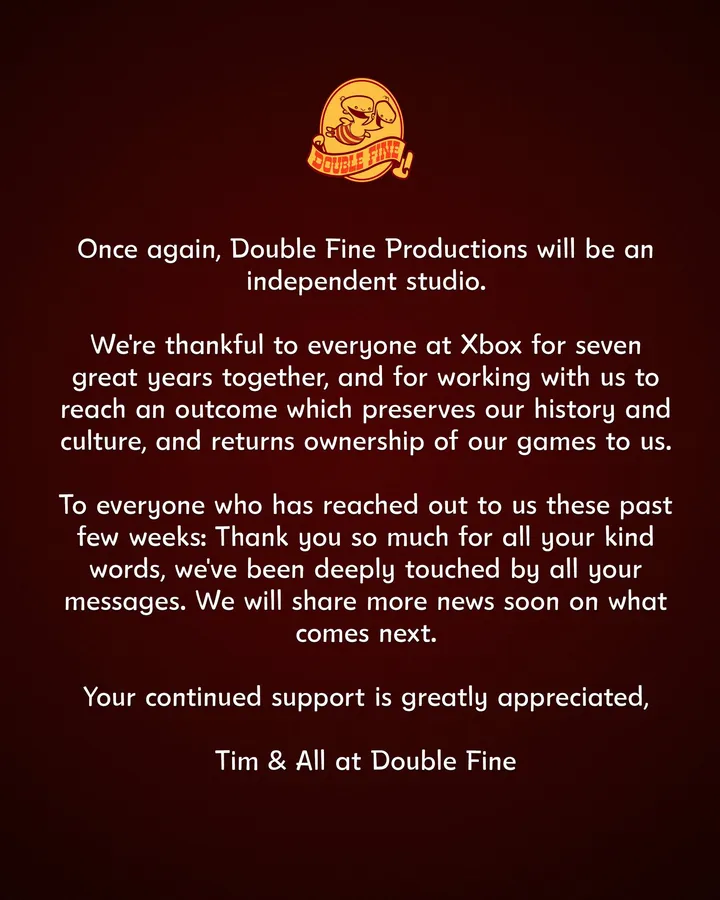
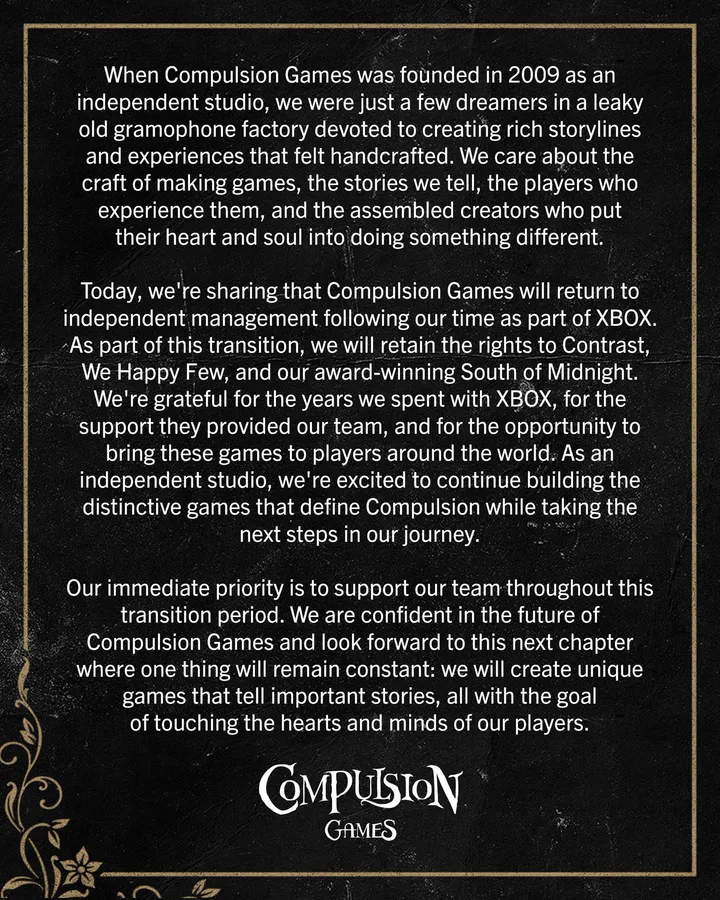
The more dramatic part of the announcement involves four studios changing hands entirely. Double Fine Productions and Compulsion Games are going back to their founders. Tim Schafer, who sold Double Fine to Microsoft in 2019, is taking the studio independent again. Guillaume Provost is doing the same at Compulsion Games, the team behind We Happy Few and South of Midnight. Both studios will operate without a publisher's budget backstop for the first time in years, which is either exciting or terrifying depending on how well their next projects land with audiences. Double Fine's official statement referred to this as returning ownership of their games to them, and the tone was equal parts gratitude and relief.
Ninja Theory and Undead Labs are being sold to new management, which is a different situation from going independent. Hellblade developer Ninja Theory and State of Decay studio Undead Labs are changing corporate owners, but Microsoft confirmed that both Senua's Saga and State of Decay 3 are fully funded and will continue to ship under whoever buys these studios. The specific buyers have not been named. That ambiguity is uncomfortable, but the fact that Xbox locked in funding guarantees before offloading the studios suggests some degree of intent to preserve the projects rather than gut them.
Arkane Lyon Has No Good Options Right Now
Arkane Lyon, the French studio behind Deathloop and Prey, is in the worst position of any Xbox first-party team right now. Microsoft has initiated the required consultation with the studio's Works Council under French labor law, which is a formal legal process that precedes potential closure or sale. The Verge reported last week that Arkane was already being weighed for closure or spinoff. Nothing has been confirmed, but the legal process now underway in France is not a routine formality. A studio with two critically acclaimed games to its name in the past decade is sitting in genuine uncertainty, and the silence from Microsoft on what Arkane's fate actually is makes the situation worse, not better.
ZeniMax Is Narrowing Its Focus
ZeniMax, the publisher behind Bethesda's flagship franchises, is not being sold but faces significant internal changes. According to reports citing Microsoft's internal communications, ZeniMax will pivot to focus exclusively on its biggest franchises: Fallout, The Elder Scrolls, Doom, Quake, and Wolfenstein. That framing sounds clean and strategic on paper. What it almost certainly means in practice is that any project or team outside those five franchises is getting cut or restructured. Microsoft also confirmed that no publicly announced games or projects are being cancelled as part of the current reductions, though the phrase 'publicly announced' carries a lot of weight in an industry where most cancelled projects never get announced at all.
How the Industry Is Reacting
The reaction across gaming has been a mix of shock, grief, and heavily conditional relief. The conditional part is almost entirely about Double Fine. The studio going independent rather than being sold to a new corporate owner has been met with genuine enthusiasm in communities that have followed Tim Schafer's work for decades. The fact that Compulsion is also going back to its founders, having shipped a genuinely praised game in South of Midnight only months ago, adds to that. But for the 1,600 workers getting laid off today, and the 1,600 more who will follow over the next year, the distinction between their employer getting a new owner versus getting cut entirely is not a comfort. The news spread across social media at a speed that reflects just how significant this announcement is, with broad industry figures treating it as a defining moment for where Xbox ends up.
CriticalPixel Take
This is the Xbox reset that everyone has been speculating about for the past year, and now it is real. Freeing Double Fine and Compulsion rather than closing them is the correct call, and locking in funding guarantees for Senua and State of Decay 3 before offloading Ninja Theory and Undead Labs is better than leaving those projects to die. But 3,200 people are losing jobs in an industry that has already shed thousands of positions across the past two years, and Arkane Lyon is in a fragile, unresolved situation that Microsoft has not given a straight answer on. ZeniMax narrowing to five franchises is a defensible business strategy that will still result in talented people being cut from projects that may never get named publicly. Xbox spent the last decade building a network of studios through acquisitions, and it is now undoing that at scale. The pivot might work long-term. The people bearing the cost of the last decade's spending decisions are not the same people who made them.