Xbox Cloud Gaming Locks Monthly Hour Caps in November: 5, 10, and 15 Hours Per Game Pass Tier
By CriticalPixel ·
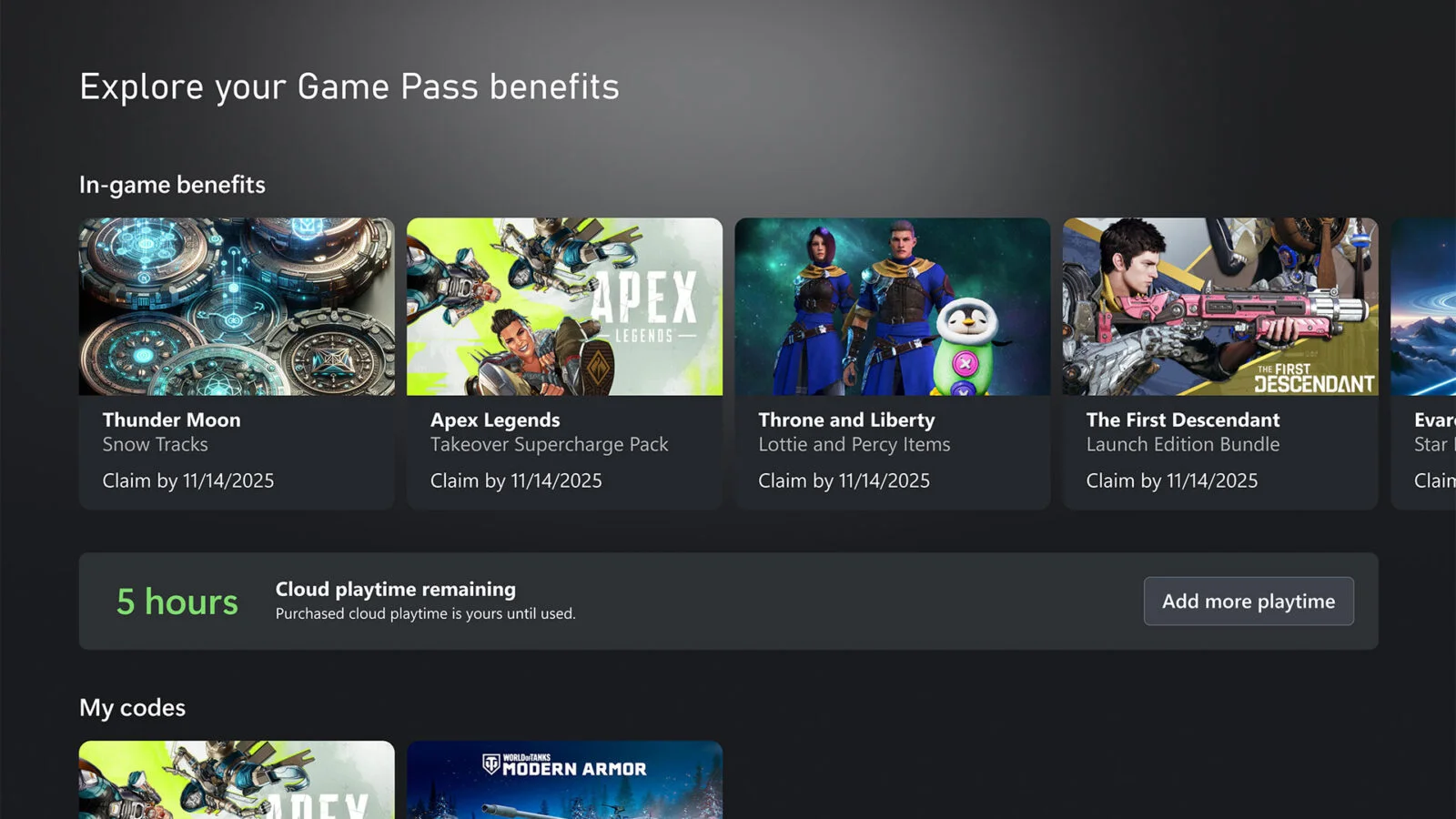
Microsoft is putting a hard ceiling on Xbox Cloud Gaming in November. The platform that has run effectively unlimited for years is moving to fixed monthly hour caps across every Game Pass tier, with subscribers who blow past the cap forced to buy extra playtime from the Xbox Store. Team Xbox confirmed the change on Xbox Wire on September 3, hours before coverage of the move blew up across social media and the gaming press.

What the new monthly caps actually look like
The numbers are tight. Game Pass Essential, which costs $9.99 a month and unlocks around 50 cloud-playable games at up to 1080p, will be capped at 5 hours of cloud streaming per month. Game Pass Premium, at $14.99 a month with roughly 200 cloud games, gets 10 hours. Game Pass Ultimate, the $22.99 flagship tier with 400-plus cloud games and Xbox Series X|S day-one launches in 1440p, gets 15 hours. Once a subscriber burns through those hours they will need to buy additional cloud playtime bundles through the Xbox Store to keep streaming, and Microsoft has not yet published the per-hour price.
Microsoft frames the change as unavoidable math. In its Xbox Wire post, Team Xbox said the cost of providing cloud gaming grows as more people use it and play for longer, and that moving to monthly limits lets the company keep offering the service while continuing to invest in reliability and performance. Microsoft also noted that only an estimated 4 percent of Game Pass subscribers will actually hit the new caps. That is the polite framing. The other framing is that unlimited cloud streaming was the most generous thing in Game Pass, and it just stopped being unlimited.
Cloud gaming without Game Pass is opening up
The flip side of the cap is the first real way to use Xbox Cloud Gaming without a Game Pass subscription. Microsoft confirmed that, starting in November, anyone will be able to buy cloud playtime bundles from the Xbox Store and stream eligible games they already own on supported devices. That gives Xbox parity with GeForce Now and Boosteroid, which have always sold cloud time directly. It also lets Microsoft pitch cloud gaming as a destination in regions where owning a Series X or S is unrealistic, which lines up with the disc-to-digital program that rolled out to Xbox Insiders at the end of August.

There are real catches. Microsoft has not said what the extra-hour bundles cost, which games will be eligible, or which markets get full access at launch. The company has only committed to sharing pricing and eligible-games lists before the change takes effect. Until those details land, every Ultimate subscriber is being asked to gamble that 15 hours a month is enough.
Community reaction: mostly negative, with a worried minority
The reception on X has been loud and almost entirely unhappy. Jez Corden at Windows Central broke the story and clocked 284 likes and 39 reposts within hours, while Wario64's running-man format retweet pulled more than half a million views and Shinobi602 hit a million impressions on a single breakdown. Klobrille, the most-followed Xbox insider on the platform, crossed a million likes on the announcement post itself. The thread underneath each of those posts is the same story. Subscribers who actually use cloud gaming feel singled out. Subscribers who do not use it do not care, but they also do not believe the 4 percent figure for a second.
There is a small but vocal faction defending the move. Colteastwood pointed out that cloud gaming affects only the heaviest streamers and that the bundles look like the GeForce Now model, so a separate subscription stack might make sense long-term. Several Game Pass subscribers on cheap Essential plans admitted they stream occasionally and were never close to a limit. But the dominant note on the timeline is that Microsoft just took the single most flexible perk in Game Pass and turned it into a metered utility, the way a mobile carrier bills hot-spot data.
Why now: the RAMpocalypse, AI demand, and Project Helix
The deeper explanation is not on Xbox Wire, but it is not hard to read. Industry reporting through August has been hammering the cost of HBM and DRAM, with Microsoft reportedly joining NVIDIA and Google in locking up 70 percent of Samsung's total DRAM output through 2031. Cloud gaming eats enormous amounts of memory per stream. When memory is scarce and expensive, an unlimited tier stops looking like a perk and starts looking like a subsidy for the people who would have bought a console anyway. Microsoft has also been rumored to be exploring an ad-supported Game Pass tier, and given that Twitch is reportedly still losing money despite a wall of mid-roll ads, an ad-funded cloud subscription was always going to be a tough sell. Charging heavy streamers by the hour is the cleaner answer.
Project Helix is the other piece. Microsoft's next Xbox is widely tipped to launch as the most expensive console the company has ever shipped, and Sony is reportedly telling courts that consumers should not expect tariff refunds on hardware they already bought. In that environment, Xbox Cloud Gaming was supposed to be the cheap path into the ecosystem for anyone priced out of a console. The new caps make that path narrower. A budget player who can only afford Essential now gets 5 hours of cloud gaming a month, which is roughly enough to finish one medium-length single-player game and nothing else.
The Critical Pixel take: this is the wrong direction at the wrong time
Xbox Cloud Gaming was the one Game Pass perk that felt genuinely modern. Streaming a day-one launch to a phone on a train, or running a Series X|S exclusive on an Xbox One that would never get the native patch, was the kind of thing that made the subscription worth defending at parties. Microsoft just told 4 percent of its paying subscribers, and probably a much larger chunk of casual streamers who never even thought to track their hours, that the math no longer works. We will believe the 4 percent figure when Microsoft publishes it with a methodology. Until then, the practical effect is that subscribers will be asked to track cloud usage in a category they were never tracking before, and the heaviest users will quietly pay more for the same experience they had last week. That is not how you sell a subscription people are already nervous about.